HVAC · the USA
Technicians measure the actual heating load of the house before equipment is ordered. They also review the existing duct layout and venting path so the new furnace integrates without creating new airflow problems.
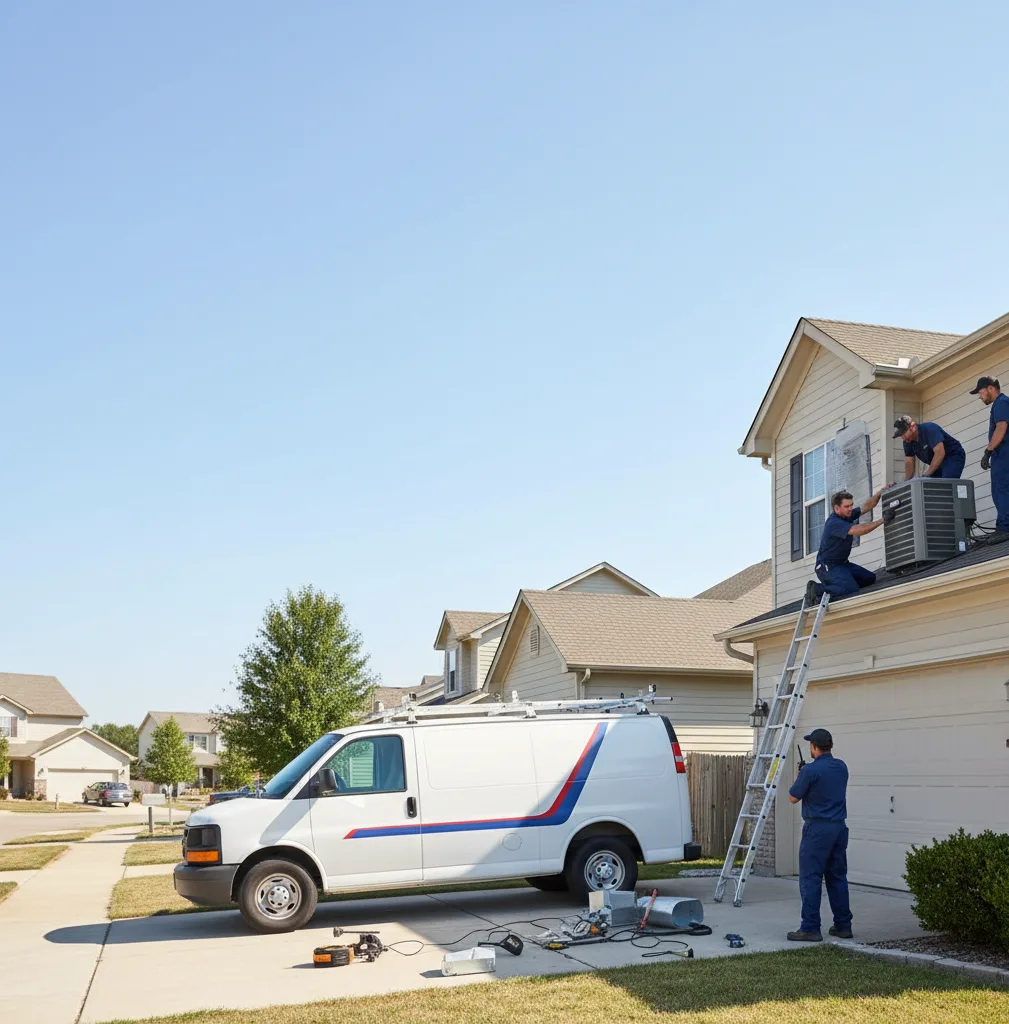
Homeowners often notice rising heating bills or rooms that never quite reach the set temperature. These patterns usually trace back to worn heat exchangers or burners that no longer ignite cleanly. A technician begins by checking the age of the unit and measuring temperature rise across the heat exchanger. If the rise falls outside the manufacturer's range, replacement becomes the practical option. The inspection also includes the condition of the blower motor and the integrity of the flue pipe, because those components affect both performance and safety once a new furnace is connected.
The process starts with removal of the old appliance and careful disconnection of gas, electrical, and venting lines. The new furnace is then positioned on a level pad and connected to the existing duct system. Technicians verify that the condensate drain slopes correctly and that all joints in the venting are sealed. After the electrical and gas lines are reconnected, the system is started and combustion readings are taken to confirm proper fuel-air mixture. Final steps include labeling the new equipment and walking the homeowner through basic controls.
FAQ

Most filters slide out easily once you locate the return grille or furnace door. We can show you the correct size and direction during a visit so future changes are simple. If the system has been running with a clogged filter for a while we may still need to inspect the blower and coil.
Confirm the thermostat is set to heat and the fan switch is on auto. Check that the power switch near the furnace is on and look at the filter to see if it is blocked. These quick steps sometimes reveal a simple fix before a technician arrives.
Short cycling usually traces back to an oversized unit, a dirty filter, or a thermostat that is not reading the room temperature correctly. We check the temperature differential across the equipment and the placement of the thermostat to narrow it down. In some cases the limit switch is tripping early because of restricted airflow.