HVAC · the USA
Every project starts with a site visit that records existing duct design, electrical service, and structural constraints. Recommendations follow from those measurements instead of pre-set menus.
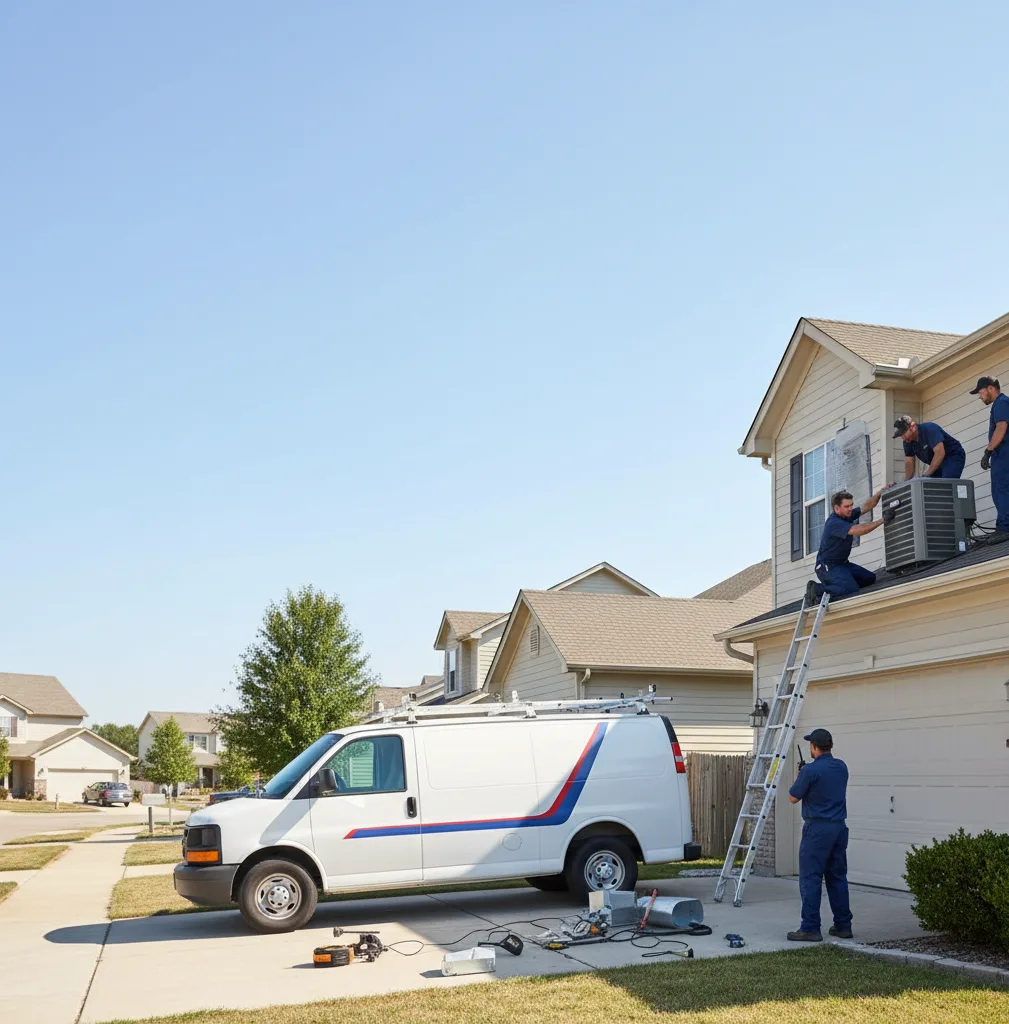
Frequent service calls, rising energy bills, and uneven temperatures often indicate an aging unit has reached the end of efficient operation. Technicians examine age, refrigerant type, and compressor condition during an initial assessment to determine whether repair or full replacement offers the better long-term outcome. Ductwork condition, electrical service capacity, and available space for the new outdoor unit are also reviewed so the recommendation accounts for the entire installation rather than the equipment alone.
Manual J load calculations replace rule-of-thumb sizing methods. The process accounts for local construction practices, orientation, and occupancy patterns that affect cooling demand. Once the required tonnage is established, options are narrowed to models that meet efficiency targets without oversizing, which can cause short cycling and humidity issues.
FAQ

Most filters slide out easily once you locate the return grille or furnace door. We can show you the correct size and direction during a visit so future changes are simple. If the system has been running with a clogged filter for a while we may still need to inspect the blower and coil.
Confirm the thermostat is set to heat and the fan switch is on auto. Check that the power switch near the furnace is on and look at the filter to see if it is blocked. These quick steps sometimes reveal a simple fix before a technician arrives.
Short cycling usually traces back to an oversized unit, a dirty filter, or a thermostat that is not reading the room temperature correctly. We check the temperature differential across the equipment and the placement of the thermostat to narrow it down. In some cases the limit switch is tripping early because of restricted airflow.